
Onondaga Resident Lookup Coverage
No universal official directory lists every Town of Onondaga resident. Instead, each record answers a narrow question. Assessment data can identify an owner of record at the roll date, while a court index can identify a case and its parties. An old directory or obituary can connect a person to a past year. Treat those as dated associations, not a claim that someone lives at an address now. The strongest result joins two independent custodians and keeps the date, role, and address type visible.
| Record | What It Confirms | Where | Access |
|---|---|---|---|
| Assessment card | Owner of record, parcel data, and separate situs or mailing fields | Onondaga County Image Mate | Public search, then Town assessor for verification |
| Voter lookup | Limited registration and polling information for an individual search | New York voter lookup | Online, with Board of Elections follow-up |
| Court index | Case number, court, party role, and filing trail | NYSCEF or eCourts | Online routes vary by court and case |
| Vital index or record | A dated birth, death, or marriage event | County Vital Statistics and OCPL | Eligibility and product rules apply |
| Historical collection | Earlier address, family, burial, or newspaper association | OCPL Local History & Genealogy | Library and collection access |
Begin with the record that matches the information already known. A tax-map number or street belongs with parcel research. A full name, spelling variant, and approximate year belong with court, library, or vital research. A resident lookup should describe the result as an association with a source on a given date, especially where a name is common.
Start an Onondaga Resident Lookup
Write down the complete name, middle initial, former surname, and approximate period before searching. Town and city boundaries matter here: a Syracuse postal label does not by itself put a person in the City of Syracuse or the Town of Onondaga. A hamlet, street, or tax-map number is more useful. Do not equate a matching name and ZIP with the same person. The County Clerk’s eSearch guest index can supply a deed or mortgage lead, but its images may require an account, subscription, or an in-person or copy route.
For a parcel lead, Image Mate asks the searcher to enter one item first. Its documented routes are Tax Map Number, Owner Name, Property Address, and Mailing Address. Search them as separate categories. A physical situs can differ from an owner mailing address, and the assessment owner may not be the current occupant. Preserve the deed book and page when shown, then use the Clerk index to confirm the recording event.
Older names need a different trail. OCPL holds directories, phone books, newspapers, obituary indexes, WPA files, and local family material. A dated directory entry is useful for family history, but the historical-city-directory collection should be read as a year-specific source, not a present-day finding.
Onondaga Voter Lookup Fields
The New York State voter lookup is an individual registration and polling tool, not a roster. The form uses county, last name, first name, date of birth in MM/DD/YYYY format, ZIP, and address information. It can provide a limited, dated corroboration when the search details match. A no-result can reflect name variation, address change, list maintenance, or a protected record. It is not proof that a person has never lived in the Town.
The state voter lookup form shows the county, name, date, ZIP, and address prompts used for the individual search.
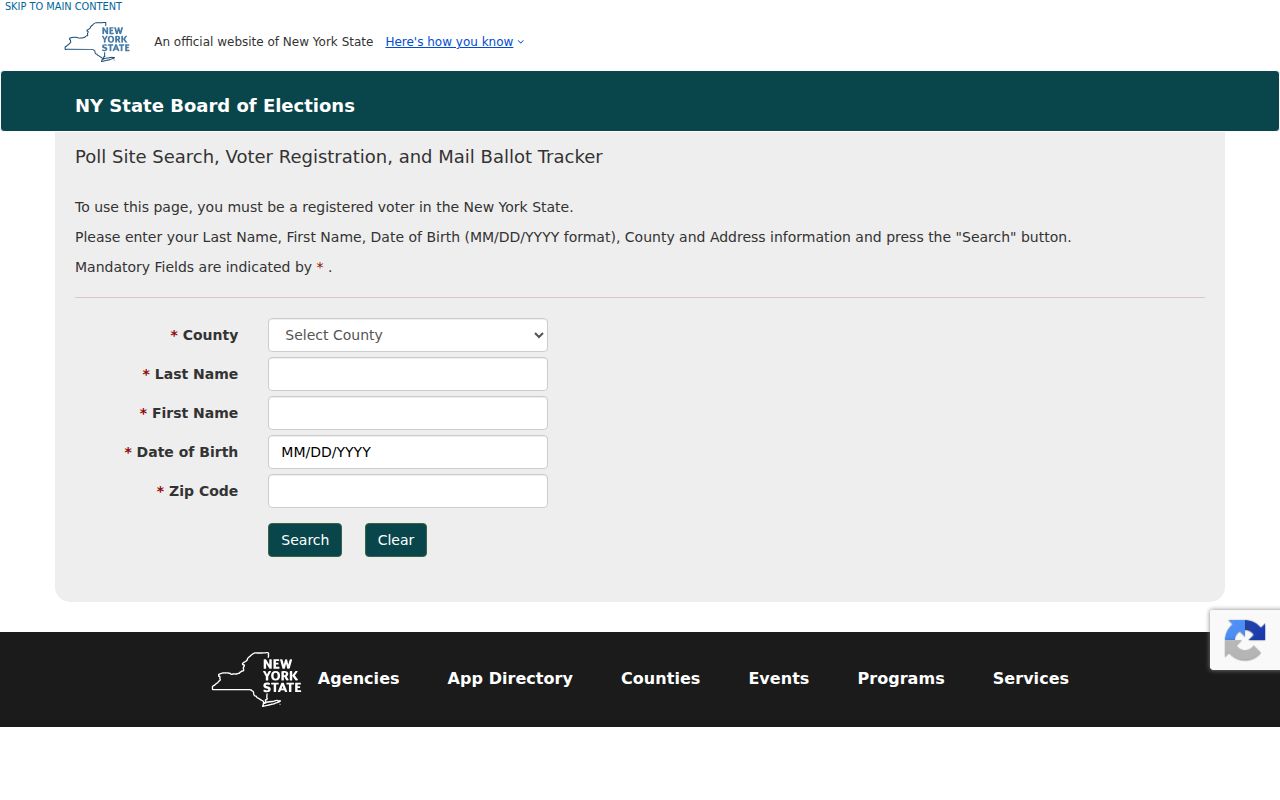
Election Law §3-220 makes registration records public under Board supervision but excludes driver-license numbers, non-driver IDs, Social Security numbers, and facsimile numbers. Keep a result to the necessary public fields and record the access date. The Onondaga County Board of Elections handles county administration, district, polling, update, and records questions.
Onondaga Court Lookup Choices
Court research is a separate kind of resident lookup. NYSCEF supports Case Identifier, Name, Tax Cert/SCAR, and New Cases modes. Name searching accepts a business or organization, or first and last name with an optional middle name. County, case type, and date controls narrow the result. A court hit needs the case number, court, filing date, party role, and disposition before it can be evaluated. A service address in a pleading is not a current home address.
NYSCEF’s search gateway presents the case and name routes used to locate participating electronic case files.
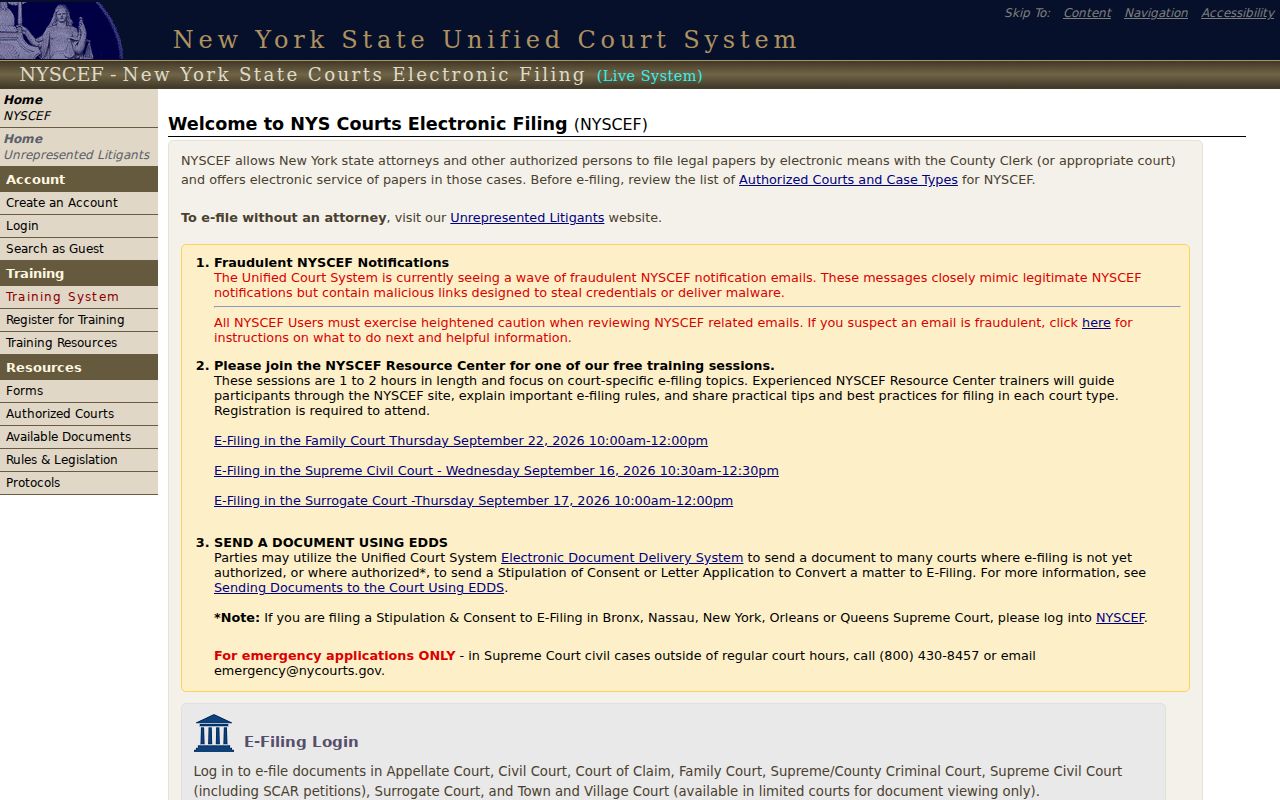
NYSCEF is not a universal criminal or Town Justice index. The Town of Onondaga Justice Court has no located online name search, so a case-specific question goes by phone or in person at Town Hall. For probate, the Surrogate’s Court portal allows party-name and date-of-death narrowing, while document access can change with the filing date and court rules.
A court result inventory should retain the source spelling, court and county, case or index number, case type, opening date, party roles, disposition date when displayed, document link, and any seal or redaction notice. This prevents a same-name result from becoming an unsupported identity claim.
Verify an Onondaga Resident Lookup
Verification means comparing evidence with the same time period, not collecting every record with a similar name. An assessment card, recorded instrument, voter result, or directory entry can each lead to the next custodian. Their dates and address labels must still agree. Use the following sequence when a name needs an address-period check.
- Anchor the name to an exact address, parcel, or historical year. Mark whether the address is situs, mailing, directory, service, or another category.
- Check Image Mate and save the tax-map number, roll date, owner of record, and deed book or page if shown.
- Search the County Clerk index for the recording date, instrument, parties, legal description, and prior-instrument reference.
- Use a voter, court, vital, obituary, or library source only for the distinct question it can answer, then write the confidence level and access date.
- Docket
- A court’s running case record, usually organized around a case or index number, rather than a biography of a party.
- Index and image
- An index points to a record. An image is the scanned or viewable document itself, and may have account, copy, or courthouse access limits.
- Certified copy
- A custodian-issued copy certified for an official purpose. It is different from an online index hit or a genealogy copy.
Onondaga Vital Record Rules
Vital records are not an open name directory. For local genealogy access, a birth record must be at least 75 years old and the person known to be deceased. A death record must be at least 50 years old. A marriage record must be at least 50 years old and both spouses deceased. Shorter periods require a qualifying relationship and proof, or other proper authority. Start with the record type, place, date, relationship, and death status before ordering anything.
Onondaga County Vital Statistics at 421 Montgomery Street accepts mail and walk-in genealogy requests. The county reports weekday walk-in hours and an approximately eight-week process, with no overnight service. OCPL’s Local History & Genealogy collection can precheck marriage and death indexes for 1881 to 1964 and birth indexes for 1881 to 1937, but it does not issue certificates. The New York State genealogy route is a separate custodian and product.
Record the application’s exact name, place, and time period. A missing early birth record can reflect incomplete pre-1914 reporting rather than absence of the event. A death or marriage record gives a dated event and may assist family research, but it does not establish a current residence.
Onondaga Public Safety Limits
Public-safety portals have narrow purposes and should never be treated as a resident directory. The County Justice Center lookup is time-sensitive custody information. A listed court date, custody location, or roster status can change quickly and does not establish a Town address or a lasting personal history. The Sheriff’s materials also link to a separate Jamesville route, so a negative result in one system is not a general conclusion.
The Onondaga County Justice Center lookup is an official current-custody search frame.
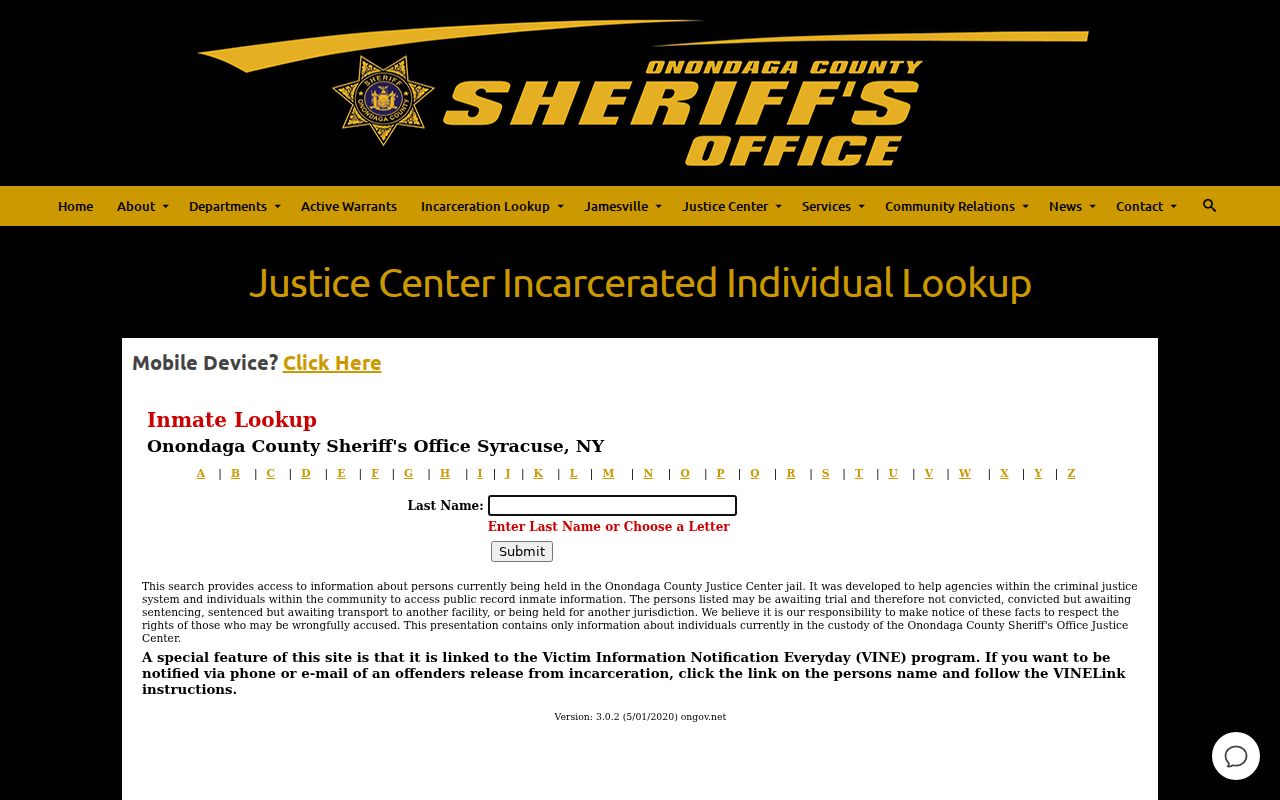
Use only the official display, note the access date, and avoid repeating cell, pod, medical, family, or other sensitive details. A result must not be used to identify or locate someone’s home.
The New York public sex-offender registry permits limited searches by last name, county, or ZIP and includes custody exclusions and a CAPTCHA.
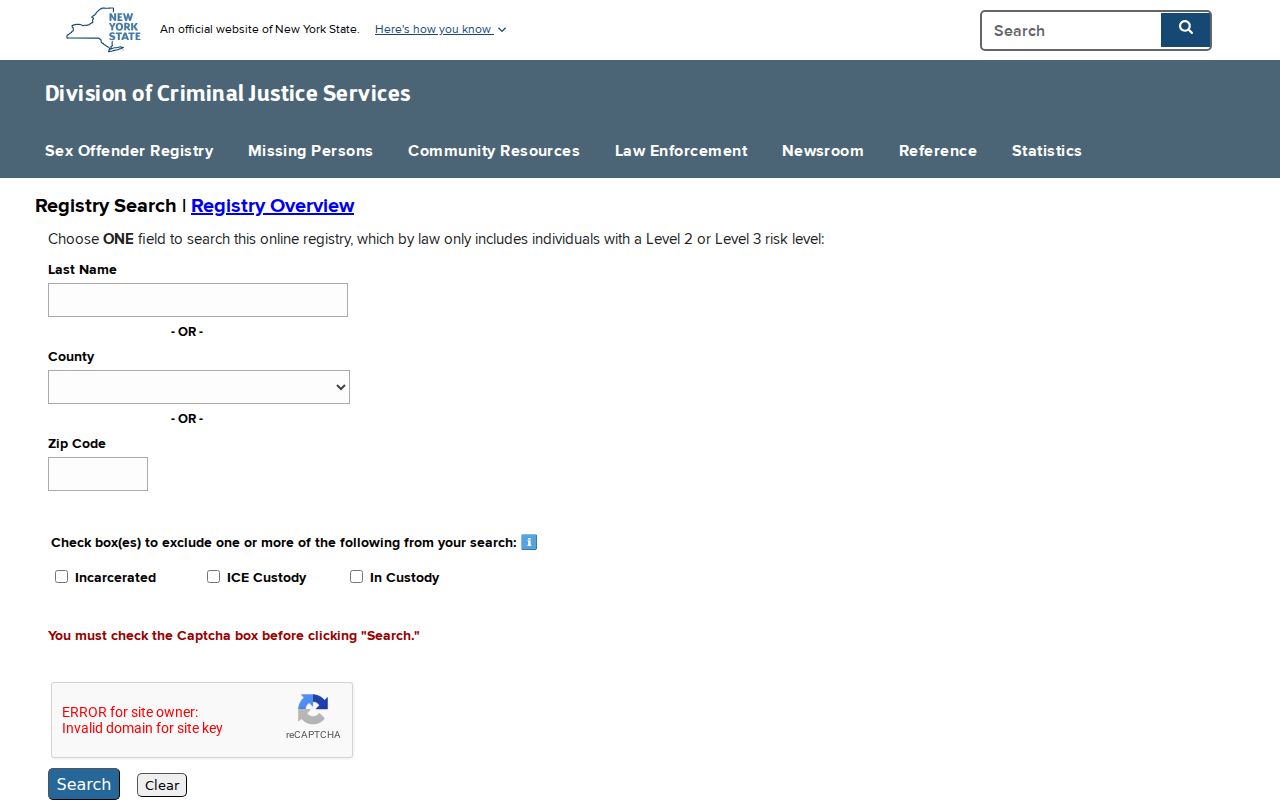
The registry is limited to published information and its official warning prohibits harassment and misuse. Similar names require careful identity confirmation, and a registry result is not evidence of current Town residence.
Onondaga Resident Lookup Limits
New York’s Freedom of Information Law allows requests for existing agency records, not a demand that staff create a current resident list or answer a research question by compiling facts. A focused Town FOIL request should name an existing record series, date range, address, tax-map number, meeting, or office. The Town form has required certification and contact fields, recommends a property address or tax ID for parcel requests, and is not a substitute for a routine name search.
Executive Law §108 protects participants in New York’s Address Confidentiality Program through a substitute address and mail forwarding. A record can therefore omit an actual address or display the program address. Election, court, adoption, and other confidential records also have their own limits. Do not try to overcome a protected result. Ask the identified custodian how to correct an error or seek an authorized privacy review instead.
Lawful use. Use a resident lookup for personal, lawful research and keep only necessary public details. Never use record results to stalk, harass, threaten, impersonate, or expose protected information.
When official and commercial people-search categories disagree, use the dated official custodian record as the starting point. Save the URL, query fields, date searched, result type, and the next verification step. That practice makes a no-result or a conflicting name useful without turning it into a claim about a person.